
skip to main content

Early careers in government finance

Early careers in government finance

Starting your career in government finance

Starting your career in government finance

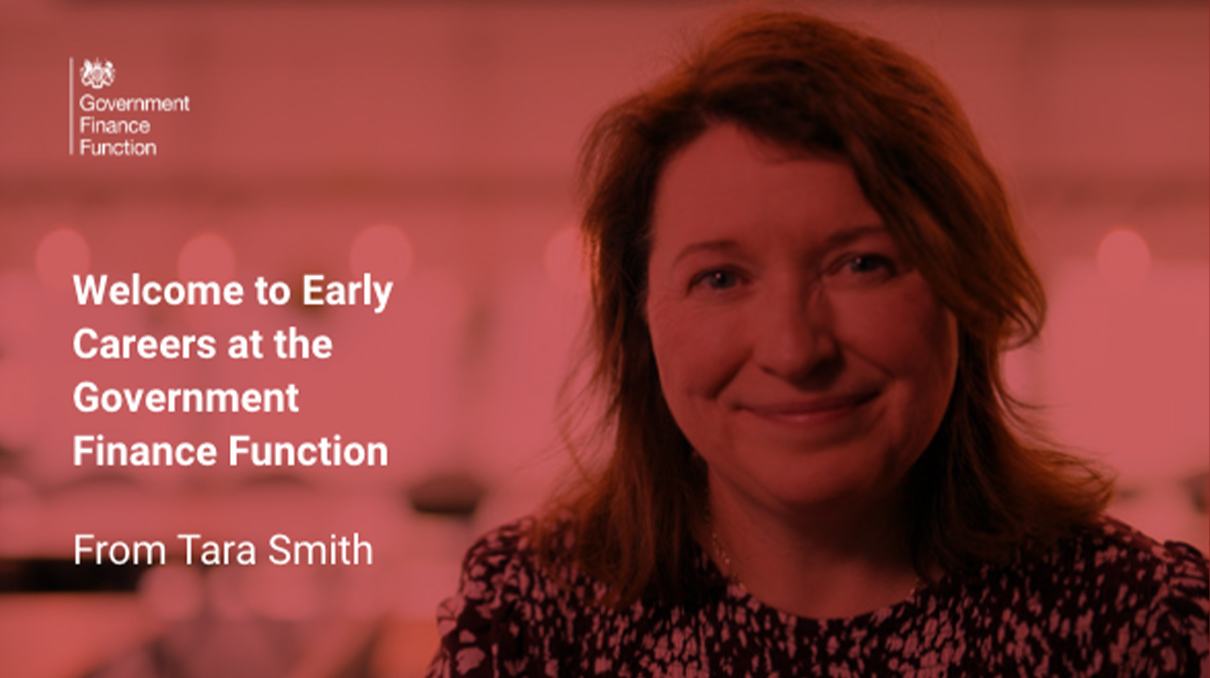
Hello, we’re the Government Finance Function (GFF) – the UK-wide community helping government make the best possible use of public money.

Every year, government finance teams support decisions that shape public services such as schools, hospitals, transport, housing, energy and much more. From managing budgets to using data and technology to improve how money is spent, our work helps ensure public services are delivered efficiently, fairly and for maximum impact.

Government finance offers a wealth of opportunity. It’s a place to build in-demand skills, work with emerging technology, gain recognised qualifications and tackle issues that matter to people’s lives. If you’re starting out, planning ahead at school or university, or thinking about your next move, you’re in the right place. Join a community where you can learn from others, grow and build a career with real purpose. On this page, you’ll find how to get into government finance, when to apply, and what you need to do next.

How do I join and when do I apply?

How do I join and when do I apply?

There are a few different ways to join us, and the right route depends on where you are now. You can apply directly into a role, join through an apprenticeship or use your degree on a graduate scheme. As for when to apply, roles and schemes open at different times throughout the year. The best thing to do is check the job search page regularly to see what opportunities are available and when applications close.

Each government organisation runs its own recruitment, which means application routes, criteria and timings can vary between departments – there isn’t a single application calendar for all roles.

You can explore opportunities via the ‘Job Search’ button at the top of this page, or through organisations and schemes such as: HMRC Finance Apprenticeships, and Civil Service Fast Stream (Finance).

Earn while you learn by joining us on an apprenticeship. You’ll gain professional qualifications (like ACCA, AAT, CIMA, CIPFA and ICAEW) that set you up for your future career while getting stuck into impactful work from day one.

Role duration: one to three years, followed by opportunities to apply for permanent roles

Application criteria: five GCSEs at grade A to C/level 4 to 9 (or equivalent)

When to apply: vacancies are advertised throughout the year as they become available

Best for: getting your start in finance and earning qualifications without going to university

Use your degree to join a structured scheme within government. You’ll build experience across different government departments, helping you find where you want to specialise before moving into a permanent role.

Role duration: typically four years

Application criteria: requirements vary by scheme, but you’ll need a degree or be studying towards one (some schemes require a specific grade)

When to apply: usually once a year, with a set application window and deadline

Best for: graduates who want structured development, varied experience and a broad introduction to government finance

Apply directly into a finance role and get started straight away. You’ll gain experience on the job, with training and support as you grow your skills and confidence while building a career in finance.

Role duration: permanent or fixed-term roles, depending on the vacancy

Application criteria: varies by role; some require GCSEs in maths and English, others focus on skills and experience

When to apply: roles are advertised throughout the year as vacancies arise

Best for: stepping straight into work and building experience in a finance role from day one

Discover more about the GFF, our roles and the application process through our virtual work experience programme. This free, fully virtual experience can be accessed anytime, from anywhere.

Through an interactive and engaging programme, you will:

  • Discover who we are as a function and the impact we have across government
  • Learn how public money works and how financial decisions are made
  • Explore the wide range of finance careers available across the Civil Service
  • Take part in activities that reflect real roles - from creating business plans to assessing financial risks and making spending decisions

Myth busting

Myth busting

It’s completely natural to have questions when you’re exploring a new career – sometimes what you hear or read doesn’t always show the full picture. Government finance can come with a few common myths, but the reality is often very different.

Here are some straightforward answers to questions people regularly ask when they’re considering a career with us.

You might also want to search for our #SoYouThinkYouKnowFinance posts on LinkedIn.

Created with Lunacy

What is the GFF?

Created with Lunacy

What is the GFF?

You’re already familiar with government and the services it funds. But behind every decision about how money is spent, there are thousands of finance professionals helping government make the best possible use of public money.

The GFF brings these people together. It connects everyone working in government finance across the UK – supporting them to learn, grow and build rewarding careers while helping deliver public services that matter.

Here are the headlines.

Working on tens or hundreds of millions of pounds… even billion-pound budgets at such an early stage in your career is unique.

Oli, Civil Service Fast Streamer
Foreign Commonwealth & Development Office

In their words

In their words

Meet some of the people who make up the Government Finance Function and are at the start of their careers. In these short videos, colleagues from across government share what they do, the impact of their work, and what it’s like to build a career in finance.

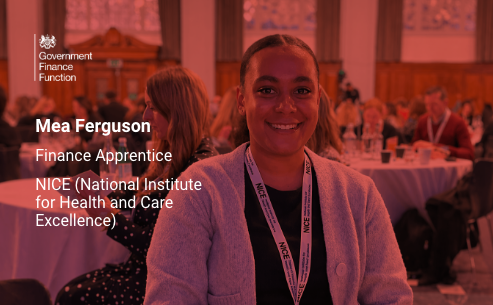
Before my apprenticeship, I was anxious…But you’re there to learn – that’s the point of an apprenticeship. You’re not expected to know everything. You’ll have people supporting you.

Declan, Finance Apprentice
Network Rail

The process

Applying for a role in government finance is designed to be fair, clear and supportive. Take time to prepare and make sure you understand what’s being asked for. Support and reasonable adjustments are available throughout.

What you’ll need to do
Most applications involve some or all the following stages, depending on the role:

You’ll be asked to complete an application form, and for some roles, to submit a CV and/or a personal statement.

This is your chance to show how your skills, experience and strengths match the job advert. Examples can come from work, education, volunteering or extracurricular activities.

Applications are assessed using Civil Service Success Profiles, which focus on things like behaviours, strengths, experience and technical skills, depending on the role. You can find out more about our success profiles here.

Applications are reviewed against the criteria in the job advert. Some roles may also include an online test. If you do have to do an online test, you’ll be told in advance and given clear guidance on what to expect.

If you’re shortlisted, you may be invited to an interview, presentation, online test or assessment centre. This varies by role.

Interviews are designed to help you show what you can do – not to catch you out – and you’ll always receive guidance beforehand.

A simple way to structure your answers is the STAR method:

  • Situation – set the scene (keep this to 10% of your answer)
  • Task – what was the problem you needed to solve? (15% of your answer)
  • Action – what did you specifically do? What tools and skills did you use? (60% of your answer)
  • Result – what was the outcome or impact as a result of what you did? Include a figure if you can e.g. 'reduced errors by 15%' (15% of your answer)

Once the process is complete, you’ll be told whether you’ve been successful. We encourage you to ask for feedback, whatever the outcome, as this can really help with future applications. Some candidates may also be placed on a reserve list for similar opportunities.

Some roles may require security checks, also known as vetting. This is a normal part of working in government and you’ll be guided through the process step by step.

Application support

Application support

We’re committed to making the process accessible and inclusive. If you have a disability, long-term condition or need extra support, you can request reasonable adjustments at any stage – from application to interview. These requests are handled confidentially and won’t affect how your application is assessed.

We’re also part of the Disability Confident Scheme, which supports disabled applicants and those with long term health conditions. If you meet the minimum criteria for a role, you’ll be offered an interview.

Is it right for me?

Is it right for me?

There’s no single ‘type’ of person who works in government finance. People join us from all kinds of backgrounds, with different strengths, interests and experiences. If some of the qualities below sound like you – or like things you’d enjoy developing – there’s a good chance you’ll feel at home here.

Application tips

Application tips

A little preparation goes a long way. These tips are based on how government finance roles are assessed and can help you put your best application forward.

Most applications involve some or all the following stages, depending on the role:

Hear from one of our recruiters

Hear from one of our recruiters

Want a bit more insight into what we look for? Watch this short video for practical tips on where to start, what we’re looking for and how to make your application stand out.

Top tip: Keep checking the email address you used for your application – this is how we’ll contact you with updates and next steps.

Making a strong start

Making a strong start

Starting a new career can feel like a big step – but you’re not expected to have everything figured out straight away.

Here are a few simple ways to make the most of your first steps in government finance:

Take time to learn

There’s a lot to take in at the start. Ask questions, stay curious and build your understanding as you go.

Keep developing

As you settle in, start thinking about how you want to grow and what you want to get from your early career.

Get to know people around you

Your team and colleagues are there to support you – and building those relationships will help you settle in.

Use feedback to grow

Feedback is part of learning. It will help you understand what’s going well and what you can build on.

Say yes to new opportunities

You’ll have the chance to get involved in different tasks. Trying new things is one of the best ways to build your skills and confidence.

Be kind to yourself

Starting something new takes time. It’s normal not to know everything at the beginning. Focus on progress, not perfection.

Frequently asked questions

Here are some of the questions people often ask when considering a career in government finance.

Can I move around and try different roles over time?

Yes. The GFF is a UK-wide community, so you can build a career across different organisations, roles and specialisms over time.

What kinds of roles could I do later on?

Government finance covers a wide mix of roles, with structured career pathways across different areas of finance.

Could I move into a different career after this?

Yes. The skills you develop – such as problem-solving, data analysis and communication – are transferable and valued across many careers.

Is it okay to not know exactly what career I want yet?

Absolutely. Early career roles are a great way to explore your interests and figure out what suits you.

How is AI used in government finance?

AI is used to analyse financial data, spot patterns, support forecasting and improve decision-making. It helps teams work more efficiently and focus on higher-value tasks.

Will AI replace finance jobs?

No, but it is changing them. As routine tasks become automated, skills like analysis, decision-making and explaining insights are becoming even more important.

Do I need to be “techy” to work in finance?

No, but being curious and open to learning helps. Across government finance, future-focused skills include digital (using modern tools), data (using analytics), and knowing how to apply technology responsibly alongside strong core finance knowledge.

Will I be working on real projects or just observing?

You’ll be doing real work from early on. That might include helping with budgets, analysing data, or supporting decisions that impact public services.

Will my work actually make a difference?

Yes. Government finance supports decisions about how public money is spent, impacting services and communities across the UK.

Is it just about saving money?

No, it’s about helping organisations use money wisely – balancing cost, value and impact to achieve the best outcomes.

What are the working hours like?

Most roles have standard working hours, with options for flexible or hybrid working depending on the organisation.

Can I work from home?

Many of our roles offer hybrid working, so you can split your time between home and the office. This means you can enjoy the best of both worlds – the flexibility of working from home, alongside the support, collaboration and sense of community that comes from being in the office.

What is vetting?

Some roles require security clearance. This is a normal part of working in government, and you’ll be guided through the process step by step. You can find out more about vetting here: Understanding vetting - GOV.UK

Do you consider sustainability in government finance?

Yes. Government finance plays a role in making sure money is spent wisely now and for the long term, including considering environmental and climate impacts in decision-making.